
abcam
ab7817

小鼠单克隆抗体[1A4] to alpha smooth muscle Actin
Anti-alpha smooth muscle Actin antibody [1A4] (ab7817) is a mouse monoclonal antibody detecting alpha smooth muscle Actin in Western Blot, Flow Cytometry (Intra), IHC-P, ICC/IF. Suitable for Human, Mouse, Rat. - KO validated for confirmed specificity - Over 1240 publications - Trusted since 2002

产品简介
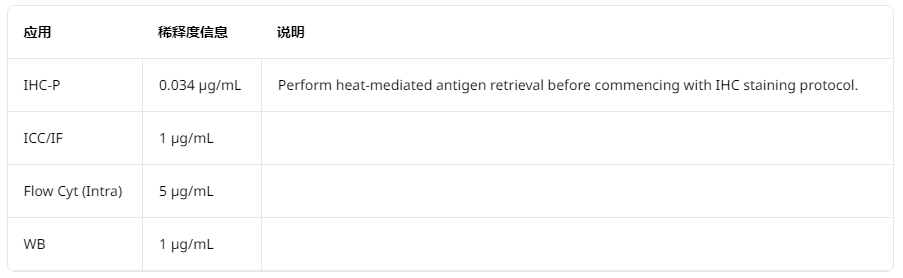
Anti-alpha smooth muscle Actin antibody [1A4] (ab7817) is a mouse monoclonal antibody and is validated for use in Flow Cyt (Intra), ICC/IF, IHC-P and WB.
Anti-alpha smooth muscle Actin antibody [1A4] (ab7817) was first used in a scientific publication in 1986 and has been cited over 1242 times in peer reviewed journals. It's performance in Western blot, immunofluorescence and IHC in human, mouse and rat samples is trusted by the scientific community.
Abcam's high quality validation processes ensure Anti-alpha smooth muscle Actin antibody [1A4] (ab7817) has high sensitivity and specificity.
The specificity of Anti-alpha smooth muscle Actin antibody [1A4] (ab7817) has been confirmed by ICC/IF testing in alpha smooth muscle Actin knockout HeLa cells (ab264014).
Anti-alpha smooth muscle Actin antibody [1A4] (ab7817) has 103 independent reviews from customers.
Anti-alpha smooth muscle Actin antibody [1A4] (ab7817) specifically detects alpha smooth muscle Actin (UniProt ID: P62736; Molecular weight: 42kDa) and is sold in 100 ug and 1 mg selling sizes.
Conjugation-ready, carrier free format available for antibody clone 1A4 - ab240654.
Antibody clone 1A4 is also available pre-conjugated to a variety of labels for your convenience - Biotin, Alexa Fluor® 488, Alexa Fluor® 594, HRP, FITC (ab12557, ab184675, ab22368, ab23696, ab8211).
Alpha-Smooth Muscle Actin (α-SMA) is a critical protein involved in smooth muscle contraction, encoded by the ACTA2 gene. Predominantly found in vascular smooth muscle cells, α-SMA plays a vital role in fibrogenesis and wound healing. It is often used as a marker for myofibroblast formation, which are specialized cells that contribute to tissue repair and fibrosis. The expression of α-SMA is associated with the activation of myofibroblasts, making it an important indicator in studies of fibrosis and other related conditions.
This supplementary information is collated from multiple sources and compiled automatically.
Alpha smooth muscle Actin also known as alpha-sma ACTA2 or anti alpha is a protein with a molecular weight of approximately 42 kDa. It is an important component of the cytoskeletal structure found in smooth muscle cells. This actin isoform is expressed predominantly in vascular smooth muscle uterine smooth muscle and gastrointestinal tissues. It plays an important role in the contractile function of these tissues contributing to the generation of force and maintenance of cell shape.
Biological function summary
The actin family of proteins including alpha smooth muscle Actin facilitate cellular movements and structural integrity. It is vital in cellular contraction and is a part of the actin-myosin complex which enables muscle cells to contract. Alpha smooth muscle Actin also participates in cell adhesion and morphology influencing the mechanical properties of tissues. Its expression indicates differentiation of smooth muscle tissue and can act as a marker for fibroblast to myofibroblast transformation often used in alpha sma staining.
Pathways
The regulation of alpha smooth muscle Actin expression serves a definitive role in the TGF-beta signaling pathway which influences cell migration proliferation and differentiation. This protein interacts with other actin isoforms and cytoskeletal components to modulate cellular responses to stimuli. Additionally it connects with proteins like caldesmon and tropomyosin during muscle contraction helping stabilize actin filaments within smooth muscle cells.
Abnormalities in alpha smooth muscle Actin expression are associated with conditions such as pulmonary hypertension and liver fibrosis. The protein is often upregulated in fibrotic diseases with its presence directly linked to excessive extracellular matrix deposition and tissue stiffness. In these disorders its interaction with TGF-beta and other transforming growth factor family members enhances pathological tissue remodeling and constitutes a target of interest for therapeutic intervention.
产品参数